Triage High in the Sky: from SATS to AI
Ethiopian and Kenyan athletes train in thin air to win. Can we train our triage tools to win in thin resources?

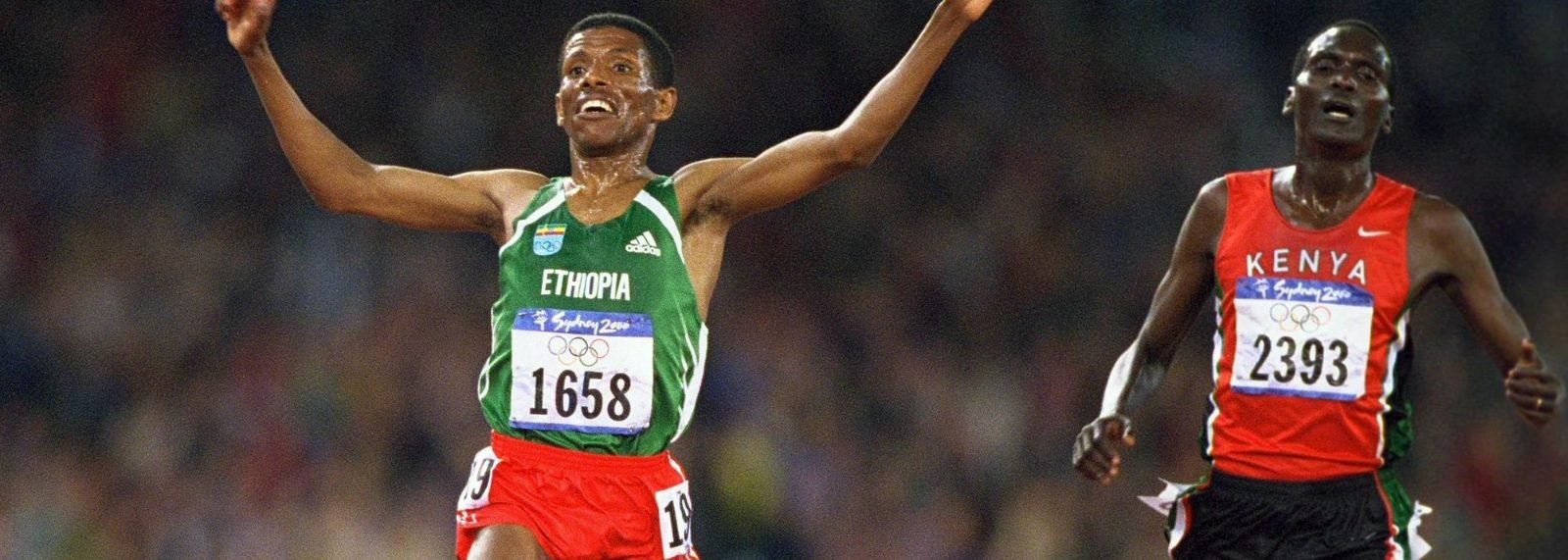
Welcome to Ethiopia, and I wish you all a smooth stay. You are officially high in the sky, Addis is Africa's highest capital sitting at about 2,355 metres above sea level. Breathless on the stairs? Blame the air, and my jokes.
Ethiopian and Kenyan athletes train in this thin air on purpose, at camps in Addis, Sululta or Iten. Less oxygen per breath makes the body produce more Erythropoietin and red blood cells, so they ultimately develop the physiologic capacity to come down carrying more oxygen . Physiologists call it adaptation. I call it resilience.

Where triage comes from#
Triage means sorting patients by urgency, not arrival. Napoleon's surgeon, Baron Dominique Jean Larrey, set up protocols for sorting battlefield casualties, and civilian use only began formally in 1964 . A battlefield is thin too, like the air up here: never enough surgeons, never enough time. Under-triage is the dangerous error, because a sick patient waits and some die waiting. Over-triage is safer but not free: a stable patient takes a resuscitation bed and everyone behind waits longer. The tool sets the ceiling, so its accuracy matters.
The SATS as an African prioritization matrix#
SATS, the South African Triage Scale, is a bedside sorting tool. The nurse measures a few vital signs, adds up a score, then checks a short list of danger signs. The answer is a colour, from red, see now, to green, can wait . Its use has been reported in many low- and middle-income countries, including Afghanistan and Haiti . In Africa, published reports cover 12 countries, but only South Africa and Ghana use it nationally. The map (Figure 1) shows evidence, not actual use: dark blue is national adoption, mid blue hospital-level use in seven countries including Ethiopia, light blue thinner reports from three more, hatching another triage system, and grey nothing found.
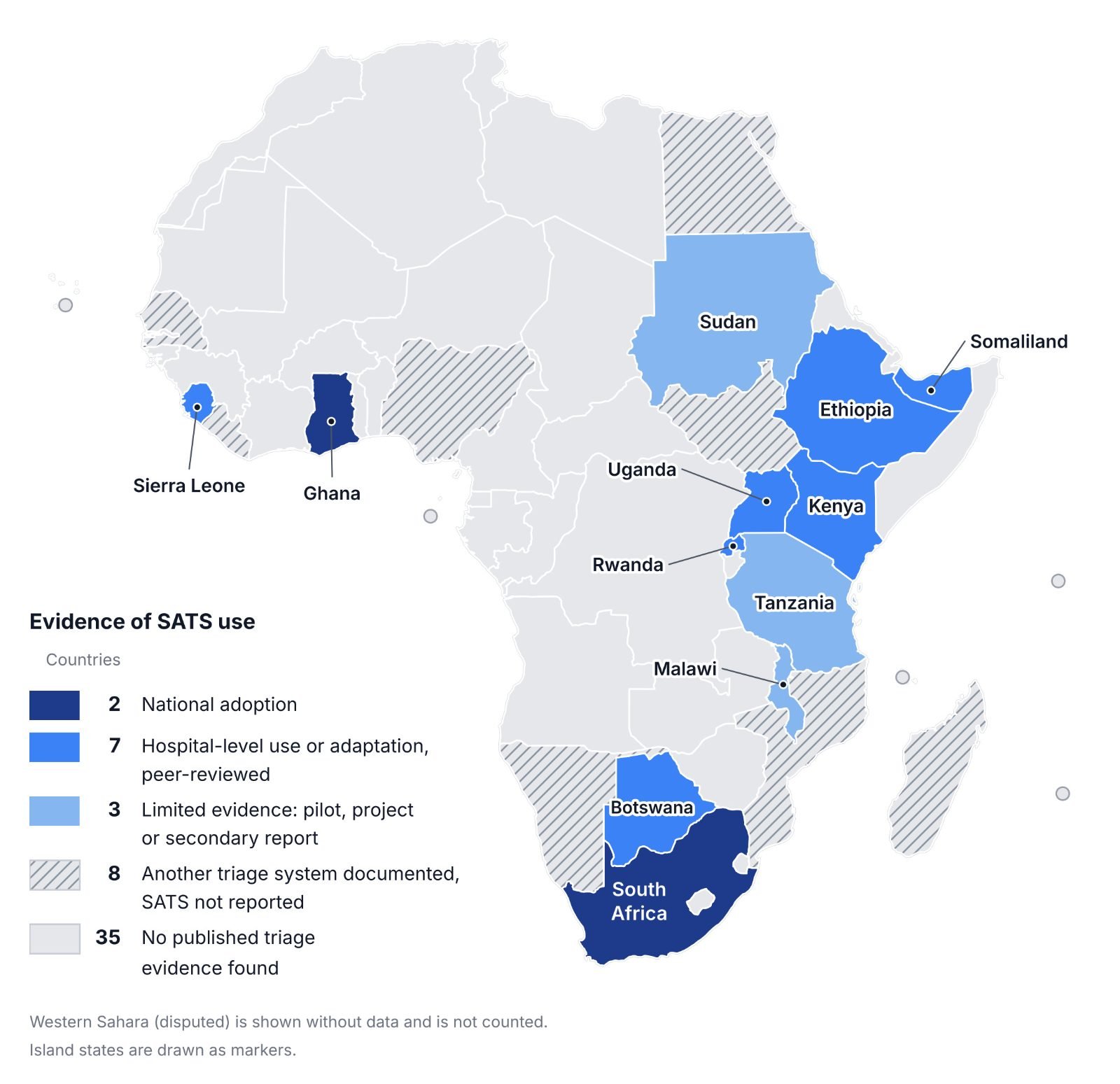
Ethiopia lacks a national guidance in standardizing triage across all tiers of health care. Most hospitals that I am aware of use an adopted version of the SATS. The commonly reported challenges reported in scientific literatures include incomplete documentation, unacceptable levels of over-triage and under-triage. Emergency triage error is not laziness, adding up a score on paper, with a queue behind you, is hard.
The same rules, on a screen#
A digital, rule-based version of SATS has been developed here in Ethiopia at Adama Hospital Medical College. It's still under study, so no numbers from me. The measurements go in, and the app applies the rules the same way every time, which in theory fixes arithmetic and skipped steps. This tool is currently available as an android mobile app, as a Google appscript web app, OpenMRS integrated clinical decision support tools. The tool is also available as a KoboToolBox for researchers interested in emergency triage. diagnostic accuracy Rules can't learn, and a case outside the table gets missed every time.
From rules to AI#
I'd like us to move from rule-based decision support to intelligent systems with diagnostic accuracy we can defend. Will it beat nurses, interns, general practitioners, residents, or consultants? I don't know, so the order matters. First finish the study, so the app becomes the baseline. Then record what happens to patients, because a model trained on nurses' colours will copy their under-triage. Define "excellent" before building. Test on new hospitals, run it silently beside nurses, log overrides, roll out in steps. Make it work offline, explain itself, and settle who owns the data.
A job for WACEM#
I'd like WACEM to open a professional discussion on this, with clinicians, data people and ministries. Athletes win up here with hard work and good camps. Training triage models in low-resource settings takes the same hard work and resources. Put them in and I expect us to win, with better diagnostic accuracy. Devising structure and components of the emergency triage datasets that can train clinical decision support algorithms should be prioritized among developers, clinicians, public health experts and policy makers working around the acute healthcare system.
What did you think?